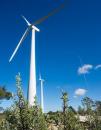
 Wind power education is on the curriculum of the New York State Energy Research and Development Authority, better known as NYSERDA. Part of the popular School Power…Naturally? program, adults and students can investigate what the potential energy production would be generated if wind turbines were built throughout the state of New York. By using the New York State Virtual Wind Farm Tool, interested students and adults can learn about wind energy in a realistic, exciting way.
The New York State Virtual Wind Farm Tool allows students to understand the elements involved in designing wind farms. This on-line tool is a graphical, computer application that gives students a chance to get a first-hand, hands-on experience understanding the wind resources that exist in New york state, and to actually (virtually) design their own wind farm. The concepts students will encounter and have to deal with are:
• What are the factors that will affect the location of a wind farm, and what geographic features of a site make it a good or bad choice as a location for a wind farm.
• Where in New York would the most productive wind farms be located?
• How modifying the wind tower and/or turbine affects the energy output of the tower and its particular cost effectiveness.
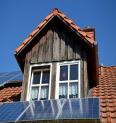
 Smallish fans have begun to pop up on many New York City buildings. Although their appearance is closer to a personal fan, these fans produce electricity just like the more noted tall white turbines. With energy prices getting higher, many residents see these fans as a great solution to keep their electricity costs lower, especially since they often bypass the electrical companies.
 A strong bill advocating solar power in New York is finding its way up the state capitol in Albany. The bill is set to give New York State what it needs to be a leader in solar energy. The New York Solar Jobs Act of 2010 would establish achievable and yet still very aggressive targets for utility companies in New York to bring solar capacity continually on-line each year — scaling up to 2.5% of the state’s total energy mix by 2025. That percentage is equal to approximately five gigawatts of solar. In other words…a lot of solar energy.